
The Raid on Dover, also known as the Cochecho Massacre, took place in Dover, New Hampshire on June 27-28, 1689. It was led by Chief Kancamagus of the Pennacook. The raid was in revenge for a treacherous ruse by Major Richard Waldron thirteen years before, designed to snare Pennacook tribal members for punishment by the Massachusetts Bay Colony authorities. In a “mock battle” arranged as entertainment, a militia from Massachusetts Bay Colony captured over 300 people, including seven or eight tribal leaders and 250 women and children. The Pennacook they targeted had fled to their relatives for refuge at the end of King Philip’s War. The sham battle participants and visitors had been promised safety by Major Waldron but they were betrayed. The chieftains were hung, and the captured tribal members were sold into slavery in Barbados. The Pennacooks never forgave Waldron for his deceit which violated all rules of hospitality and honor for both people. 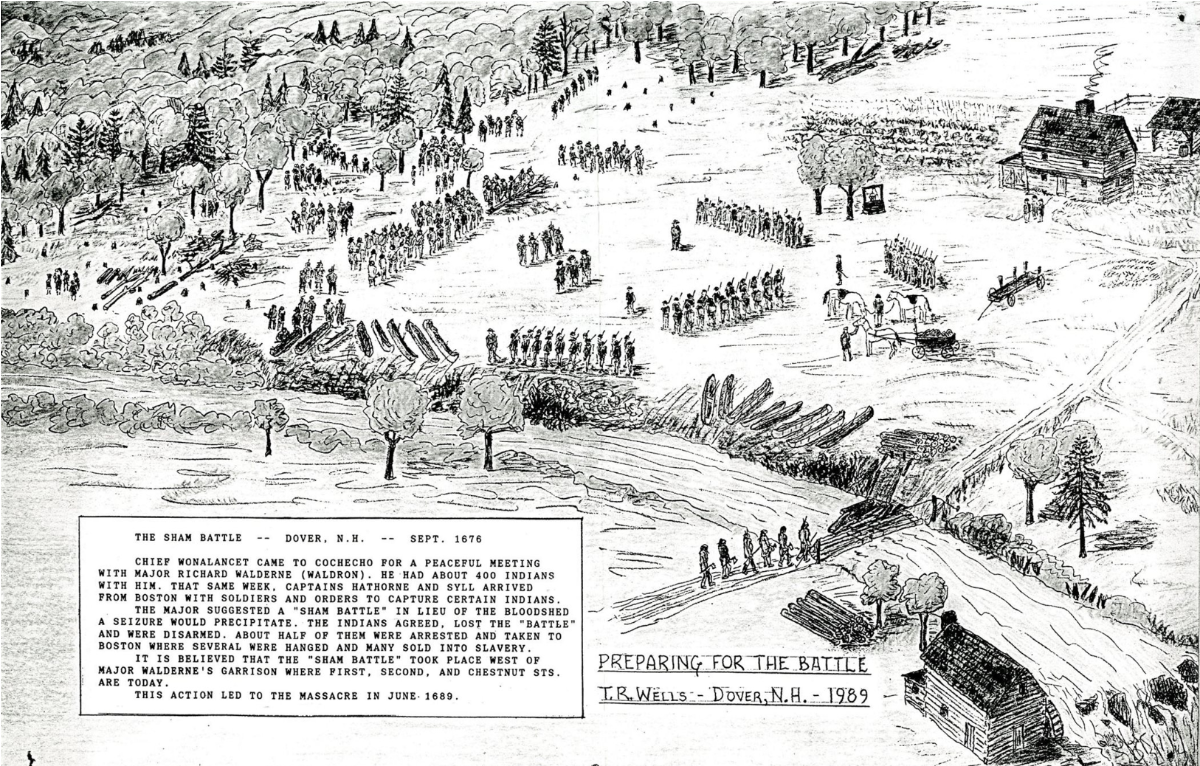
Major Richard Waldron or Walderne (January 6, 1615-June 27, 1689) was born in Warwickshire, England. He arrived in the Massachusetts Bay Colony in 1635. He became a prominent merchant and Puritan leader in colonial Dover, New Hampshire. He was described as “immensely able, forceful and ambitious.” Waldron ran a trading post, where he was accused of pressing his fist down on the weighing scales when conducting trades with local tribes. He alledgedly cheated and underpaid the Indians for the pelts they traded for goods.
A side note: the Indians were not the only ones who despised Major Waldron. He is connected to my own English settler ancestor, Richard Nason, by mutual animosity. Waldron is the person behind the famous 1662 incident when three Quaker women were stripped and flogged as they walked in snow and slush on the way to Boston. “You are required in the King’s Majesty’s name,” his directive began,” to take these vagabond Quakers, Anna Coleman, Mary Tomkins and Alice Ambrose, and tie them fast to the cart’s tail. Then drawing the cart through your several towns, to whip them upon their naked backs not exceeding ten stripes apiece on each of them in each town.” After passing through two towns, the Quaker women were freed by Kittery’s Selectmen, Richard Nason, James Heard and Nicholas Shapleigh. They were taken into their homes and protected. In response, the three men were promptly dragged into General Court, charged with being Quakers and dismissed from office. Richard Nason’s battles with Puritans and Puritan authorities went on until he died thirty years later.
The tribe waited thirteen years before exacting retribution for the sham battle in 1676. A few days before the raid, some Pennacook women warned settler friends that danger was eminent. The women brought their concerns to Major Waldron, who mocked them by saying, “go plant your pumpkins.” On June 27, 1689, two Pennacook women appeared at each of five garrison houses, asking permission to sleep by the fire, a practice not uncommon in peaceful times. All but one garrison house allowed them to do so. During the night, the women unfastened the doors, allowing the waiting warriors to enter. 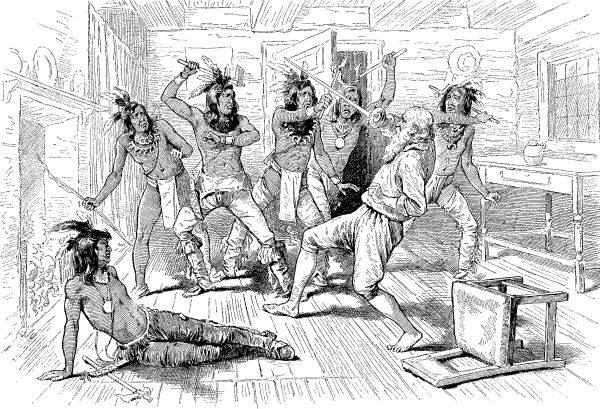
All the garrisons were quickly overcome. Major Waldron attempted to fight the warriors with his sword but was quickly overpowered. He was tied tightly to a chair. Each Indian cut him once across his chest with a knife while saying, “I cross out my account.” His nose and ears were cut off and stuffed in his mouth. After that, he was made to fall on his sword. After he died, one hand was severed from the major’s wrist as retribution for those many instances when he cheated during trading. The Waldron Garrison House was then burned to the ground and the rest of his family killed or taken captive. They were sold as servants in Quebec.
The Pennacook raiders did not kill indiscriminately. People who had been friendly to them, like Peter Coffin and his family, were spared capture and death. Their belongings were looted but their garrison house was not burned nor were they harmed. Likewise for his son, Tristam’s, garrison house and family. The Otis garrison house was burned, and Richard Otis was killed, along with a son and daughter. His wife, an infant daughter, and two grandchildren were taken captive. Overall, twenty-three people were killed and twenty-nine taken prisoner and sold.
A very special story emerged from the raid. Thirteen years before, when the Massachusetts militia were seizing captives from the “sham battle” to drag off to Boston, a woman named Elizabeth Hull Heard (abt. 1628-1706) saw a terrified Indian boy trying to hide himself in a stand of oak trees near her home. She rushed him into her house and hid him for the rest of the day into early evening until the chaos had died down and she believed it was safe enough for him to return home through the woods.
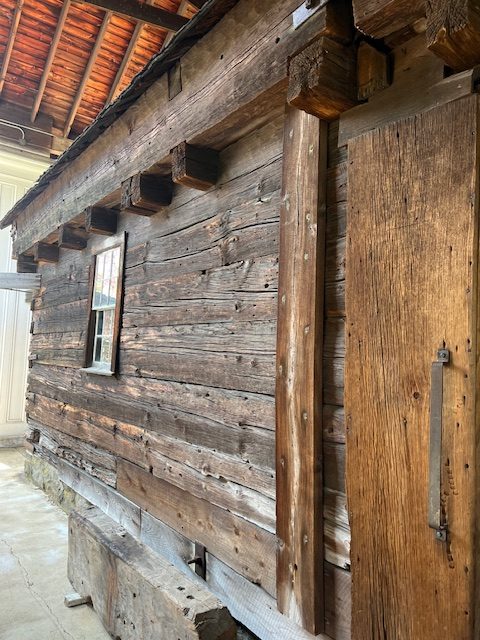
On the day of the Cochecho Massacre, Elizabeth Heard and her family were returning from a trip to nearby Portsmouth with the dawn tide. After landing, they could smell smoke and hear cries and screams. Elizabeth was overcome with fear and told her family to hide her in the bushes and flee. One warrior spotted her in the thicket and raised his rifle to kill her. He suddenly stared hard at her face, and then turned and walked away, never revealing her location to others. It was the boy she had saved and hid in her house. Now as a young man, he remembered her from years ago and repaid her kindness and mercy. We heard this story from the guide at the Woodman Institute Museum in Dover, N.H. It was passed down by the descendants of Elizabeth Heard. All her family made it safely through the raid. The William Damm Garrison House, built in 1675, survived the raid, and is now a featured exhibit at the Woodman Institute. The walls of the garrison house were made from timber 20-24” thick. It is a formidable building.
Major Waldron’s garrison house was located on the site of the present Old County Courthouse on Second Street. Richard Otis’ was just off Central Avenue near the corner of Milk and Mount Vernon Streets. Elizabeth Heard’s was on the slopes of Great (now Garrison) Hill. Peter Coffin’s house was near the present Firehouse Restaurant on Orchard Street, and Tristam Coffin’s was located somewhere between Nelson Street and the old Belknap School.
Major Richard Waldron is buried in the Cochecho Burying Ground, Dover, New Hampshire. It is also known as Waldron Cemetery. I felt no pity for him looking at the large stone which supposedly stands over his grave.
