The Dohertys
Two Dohertys lived in Alaska in the mid-1970s. They were Lynn Twigg, a guide and pilot, and Karen (Doherty) Tillinghast, a Sierra Club activist and state employee. They both loved Alaska, loved the outdoors, and loved partying in bars with their friends. Karen and Lynn were second cousins.
Karen moved to Juneau, Alaska in May 1974, two weeks after her college graduation. Her dad, Eugene Doherty, was Lynn Twigg’s cousin and told her Twigg was a well-known guide and pilot. Karen meant to look him up but left Alaska before she had the opportunity to connect. Lynn Twigg and his family lived in Talkeetna, a town about 150 miles north of Anchorage and roughly the same distance from Denali National Park. During her time in Alaska, Karen had been to Denali once and Anchorage a few times but that was as close as she got to meeting him.
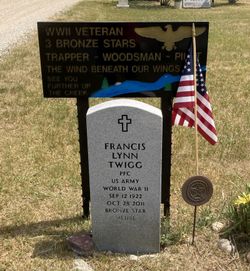
Francis Lynn Twigg was born September 12, 1922, in Fife Lake, Kalkaska County, Michigan, the settled home of the Dohertys after they arrived from Ireland. He was the son of Claude J. Twigg (1896-1962) and Fanny Geraldine Doherty (1905-1983). Fanny Geraldine Doherty was the younger sister of Francis “Frank” Burton Doherty (1886-1945), who was Karen Tillinghast’s grandfather.
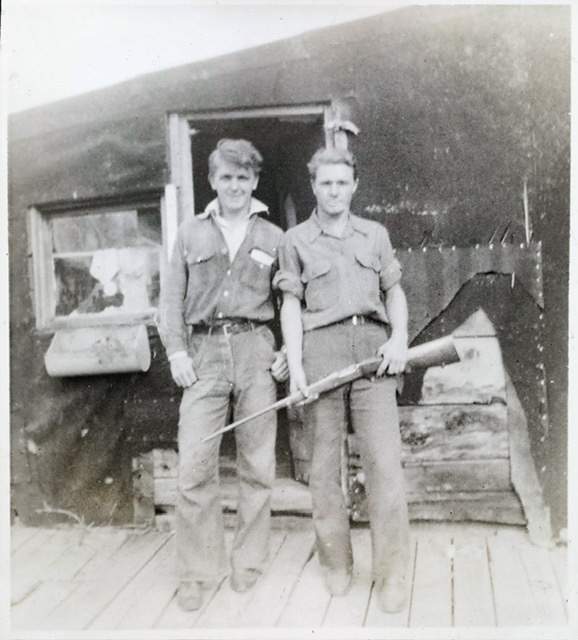
Karen’s father, Eugene Doherty, was close to his father’s family in Michigan. I’m sure he met his cousin Lynn on visits to the family farm at Fife Lake. They were the same age and both fought in World War II. The cousins grew up to be good shots. When Karen visited Michigan with her parents for a Doherty Family Reunion in 1956, she met Lynn’s mother, Geraldine, and his aunt, Minnie Rose, who everyone called “Bird.” I remember hugging them, their housedresses warm from the sun. The boys went hunting for snapping turtles, and I had my first snapper soup. It was very good. It tasted like beef stew. I don’t know if Lynn Twigg was at the clan get together, but certainly many members of his family participated.
Francis Lynn Twigg
During World War II, Twigg saw action in North Africa and Italy. He was a scout who led mule trains across the Italian mountains, fought in a major engagement in the northern Apennine Mountains, and witnessed the public hanging of “Il Duce,” Benito Mussolini and his mistress.
Lynn arrived in Alaska in 1950 when he was 28. According to his obituary, he drove his personal patrol car to Seward and sold it to the police department. He headed north to Talkeetna. He lived in Talkeetna for over 60 years. Lynn Twigg became well known for his knowledge of the landscape and wildlife, becoming a respected guide, hunter, trapper and pilot. One of his favorite places to unwind was the Fairview Inn, playing honky-tonk piano and dancing with the ladies. His favorite dance partner was his wife, Connie.
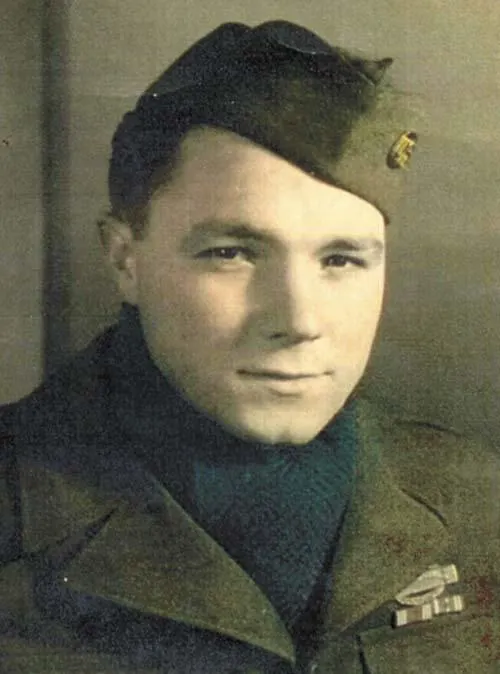
Lynn was considered one of the “old timers” of Talkeetna, and is featured in videos about Don Shelton and Cliff Hudson, two friends who were pioneering bush pilots. He was also close to Rocky Cummings and Jim Beaver, legendary trappers and miners.
He died on October 28, 2011, at age 89 in Talkeetna, Alaska. He is buried in Garfield Cemetery, Kalkaska County, Michigan. Many Dohertys are buried there.
Karen (Dohery) Tillinghast
Karen Tillinghast and her husband, Jonathan (Jon) Tillinghast arrived in Alaska May 1974 during the first flush of oil drilling and the Trans Alaska pipeline development. It was also the time of the “Alaska lands” legislation, with the roiling controversies, deals and fights over land preservation, development, and native Alaskan land selections. It was exciting to be young in the mix of such a consequential time.
At some point after my arrival, I decided to learn more about the Tlingit language and culture. In a September 4, 1974 letter to my parents, I talked about Alice Vavalis, who was to be a very important person in helping me to acclimate to Juneau and develop an appreciation for Tlingit expertise in making sense of a land so different from what I knew. Her friendship and guidance helped me not to feel unmoored.
“I met my tutor in Tlingit a few days ago. Her name is Alice Vavalis, and I would guess she’s in her late 50’s. We hit it off quite well, and I even know a few words of Tlingit now.”
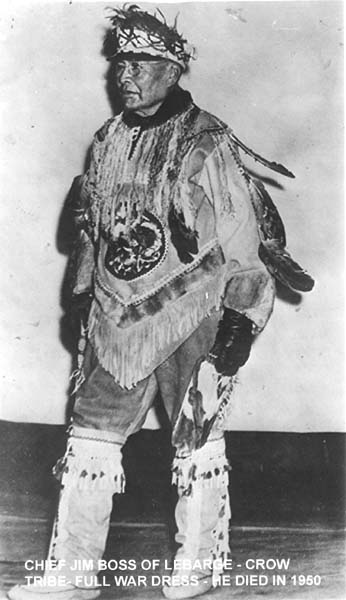
“Dad should be especially interested in this…Her father was an Athapascan chief up in the Yukon, named Jim Boss. He owned Lake LaBarge and knew Sam McGee. Does the poem, The Cremation of Sam McGee ring a bell? The real story was – a man was dying of scurvy aboard a vessel in Lake LaBarge – stuck in the ice. By the time a doctor arrived the man had died, and the ground was so frozen they couldn’t bury him. So, the doctor cremated him and sent his ashes back to the states. A man named Sam McGee used to frequent the area around Lake LeBarge, and Robert Service used him as a model for the poem. Mrs. Vavalis’ father owned the lake & the area surrounding it and charged the Klondike Gold Rushers money to ferry them across. His native costume and personal belongings are in a museum up in Whitehorse, and Mrs. Vavalis showed me two pictures of him all dressed up. She is considered Tlingit since the Tlingit consider only the mother’s bloodline. It’s a matriarchal society much like the Iroquois. She belongs to the Raven Clan. She seems to enjoy teaching me Tlingit, and about all the tribal legends & totem signs.”
Alice Vavalis was a recent widow when I first met her. She had been married to John Vavalis, a carpenter from Greece. She had at least five or six children and I met one or two of her daughters. The daughter owed or owned a part-interest in the “Top Hat” a bar on Franklin Street in Juneau originally owned by Mary Joyce, a famous pioneer and adventurer. I was in the bar one night and Mary Joyce bought me a drink. I felt quite honored.
Through her mother, Maude, Alice was a member of the Raven/Sockeye Salmon Clan (Yeil/Lukaax.adi). It is a very prominent clan in the Haines, Alaska area where she was born around 1916. I remember she told me her mother died when she was small in the 1918 influenza epidemic. At some point, Alice was adopted by James Jackson of Juneau.
Alice’s father was Chief Jim Boss of Lake LaBarge in the Yukon Territory. His second wife was Alice’s mother. He did a lot of business with prospectors and newcomers who came in the wake of the gold rush. (Note: his regalia is housed in the MacBride Museum in Whitehorse, Yukon Territory.)
I last saw Alice in June 1989, when I went back to Juneau for a short visit. She had moved to Douglas Island. I wanted to thank her for all she had done for me when I lived there. When it was time to go, she gave me a pair of earrings she had beaded. Alice died in 2007 at the age of 91.
The little incidents and occurrences in our relationship have blurred over time, but what is left is gratitude for the time she spent with me. My start with Tlingit language and culture led me to meet and interact other Tlingit people who had a major impact on how I viewed the land. My view changed from a 1970’s environmental ideal of a wilderness vista of no people and chopped up land usage, to an integrated view of people who belonged to the land and were sustained by it.
Interestingly, for all our love of Alaska, Lynn Twigg and I opted to return east for burial. The land that formed us, and the bones of the ancestors still have drawing power.