
A Violent Man
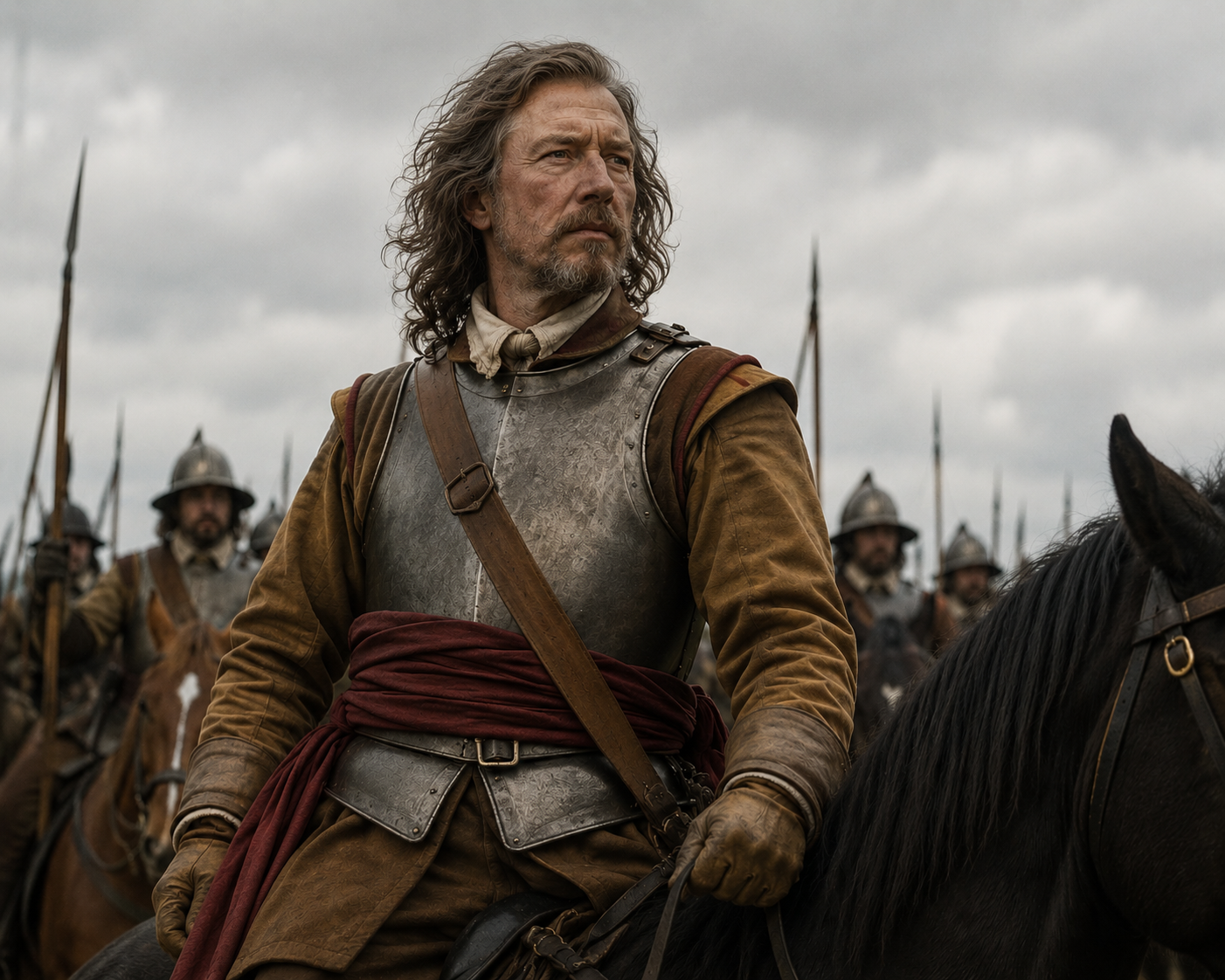
John Baker was a volatile troublemaker who emigrated from England with his family to the Massachusetts Bay Colony during the beginning of the Great Migration in 1630. What’s notable is that he moved around constantly: Charlestown, MA (1630), Newbury, MA (1637-38), York, ME (1639), Boston, MA (1641-42), Dover, NH (1643), York, ME (1646), Dover, NH (1647-50), Wells, ME (1653), Cape Porpus, ME (1653), Boston, MA (1653). There is no stated reason for this behavior, but in studying mentions in journals and court records, Baker was in constant need of “fresh starts” due to conflicts with religious authorities and neighbors and his habit of discarding laws and social norms. In 1653 Baker was banished from the Massachusetts Bay Colony as a “blasphemer, atheist and a liar.” After 23 years in Massachusetts Bay Colony, he returned to England.
John Baker was born around 1592 in Bewdley, Worcestershire, England. His parents were Nicholas Baker (c. 1568-1632) and Mary Hodgetts (1569-1661). His parents settled in New Haven, CT and are buried there. They had at least six children. John was their third child.
John Baker emigrated with his wife and at least one child. A judgement against John Baker in 1646 mentions “wife and children.” A daughter, Sarah, married Richard Nason around 1635 in Dover, NH. Her birth year is around 1617. She died about 1662-64 in Kittery, ME. Her birthplace is unknown, but she was born in England. One of her sons, Baker Nason, was named after her father. Her mother’s name is unknown – it may have been Sarah, Rebecca, Chastity or something else. “Goody Baker” disappears from history after 1651 after a man who won a York, ME court judgement against her husband gave her the cattle he was awarded for her maintenance. If her husband sparked fury, she has inspired kindness and concern. My sense is that if she was still alive when John Baker was banished, she would have been glad to see him leave.
John Baker’s moves from town to town can be tracked through his church memberships, civil appointments and court records. It’s a totally mixed bag: he threatens violence, then he’s a court deputy, a wealthy man with properties in multiple locations; well known to colony leadership as a dubious character; penitent, and then defiant and defamatory. He was constantly in arguments, fights and disputes with everyone around him: neighbors, Indians, in-laws, civil and puritan authorities. It appears that he was very willful, independent and had a problem with authority.
In the 1650s, the Massachusetts Bay Colony was a strict Puritan theocracy. It fiercely suppressed unauthorized preaching to preserve civil and religious unity. Other faiths – like Quakerism and Catholicism – were banned. No religious disagreement was permitted. Conflicts arose when freethinkers spoke their minds or attempted to avoid services. They also cracked down on “prophesying,” claiming to speak direct divine revelation or offering alternate scriptural interpretation. The Colony’s General Court considered unauthorized preaching not only heresy but sedition, as it undermined the authority of church elders and civil magistrates.
Baker finally pushed the authorities too far and they went after him hard.
1653 – 6 July – “Several articles were exhibited against Jno. Baker for abusive & opprobrious speeches uttered by him against the ministers & ministry for upcoming private meetings & prophecying to the hindrance & disturbance of public assemblings, some of which being proved against him he tendered voluntarily to desist from prophecying publicly anymore.” Found guilty of unauthorized preaching and prophecy.
1653 – Returned to the First Church in Boston. He was expelled for “blasphemy and atheism” and banished from the colony.
Cromwellian Soldier
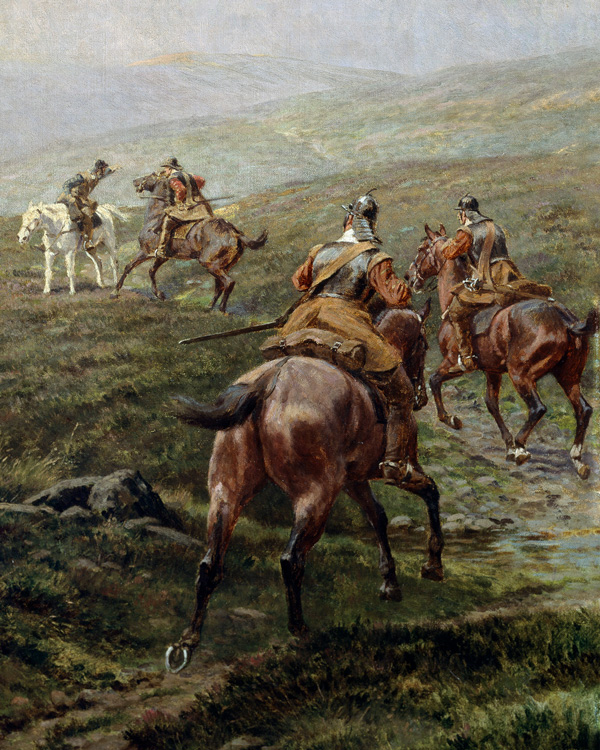
About the time the banished John Baker arrived back in England, Oliver Cromwell had dissolved the Parliament with military force and appointed himself Lord Protector, the equivalent of a military dictator. Baker became a halberdier in Cromwell’s Horse Guard. He was 61 years old. He served as Captain John Baker. Baker may have been assigned to Colonel John Okey’s regiment. Okey was one of the 59 signatories of King Charles I’s death warrant. The Parliamentarian military forces were widely referred to as “Roundheads” due to their close-cropped hair and metal helmets.
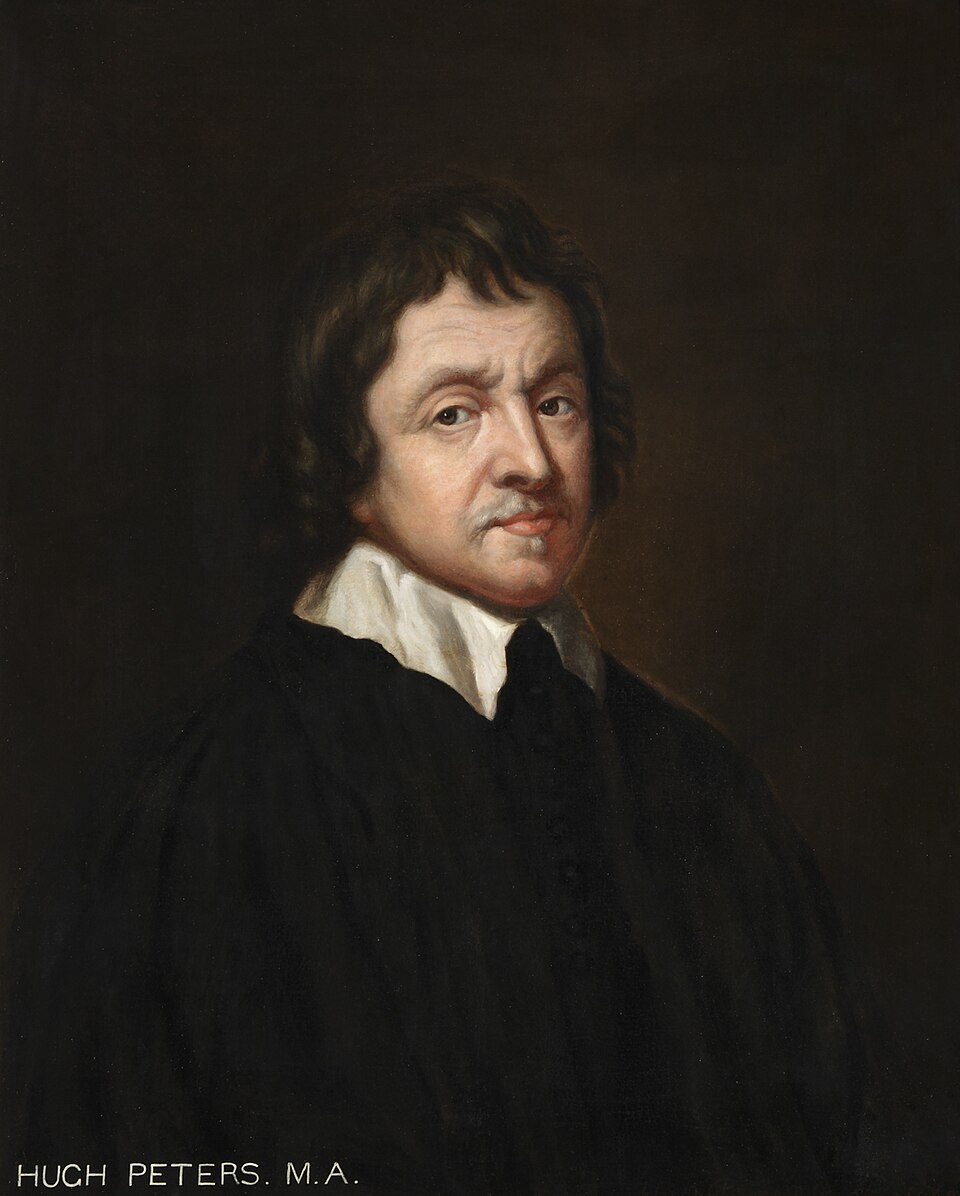
John Baker must have enjoyed his proximity to power and sanctioned violence. Baker owed his position to Hugh Peter (1598-1660), an English preacher, political advisor and soldier who was close to Oliver Cromwell and served as one of his most trusted advisors. Peters came from a radically Protestant family. He immigrated to Massachusetts Bay Colony in 1635 and was connected to Gov. John Winthrop through his wife. He formed friendships with a number of colonists. He returned to England in 1641 and served as an army chaplain. Peters fiercely advocated for the trial and beheading of King Charles I in 1649. He is believed to have been the headsman’s assistant on the scaffold. Following the return of King Charles II, he was arrested in 1660 and tried as a regicide. He was executed at Charing Cross on 16 October 1660, sentenced to be hanged, drawn and quartered. Some contemporaries said he watched the executions prior to his own in despair.
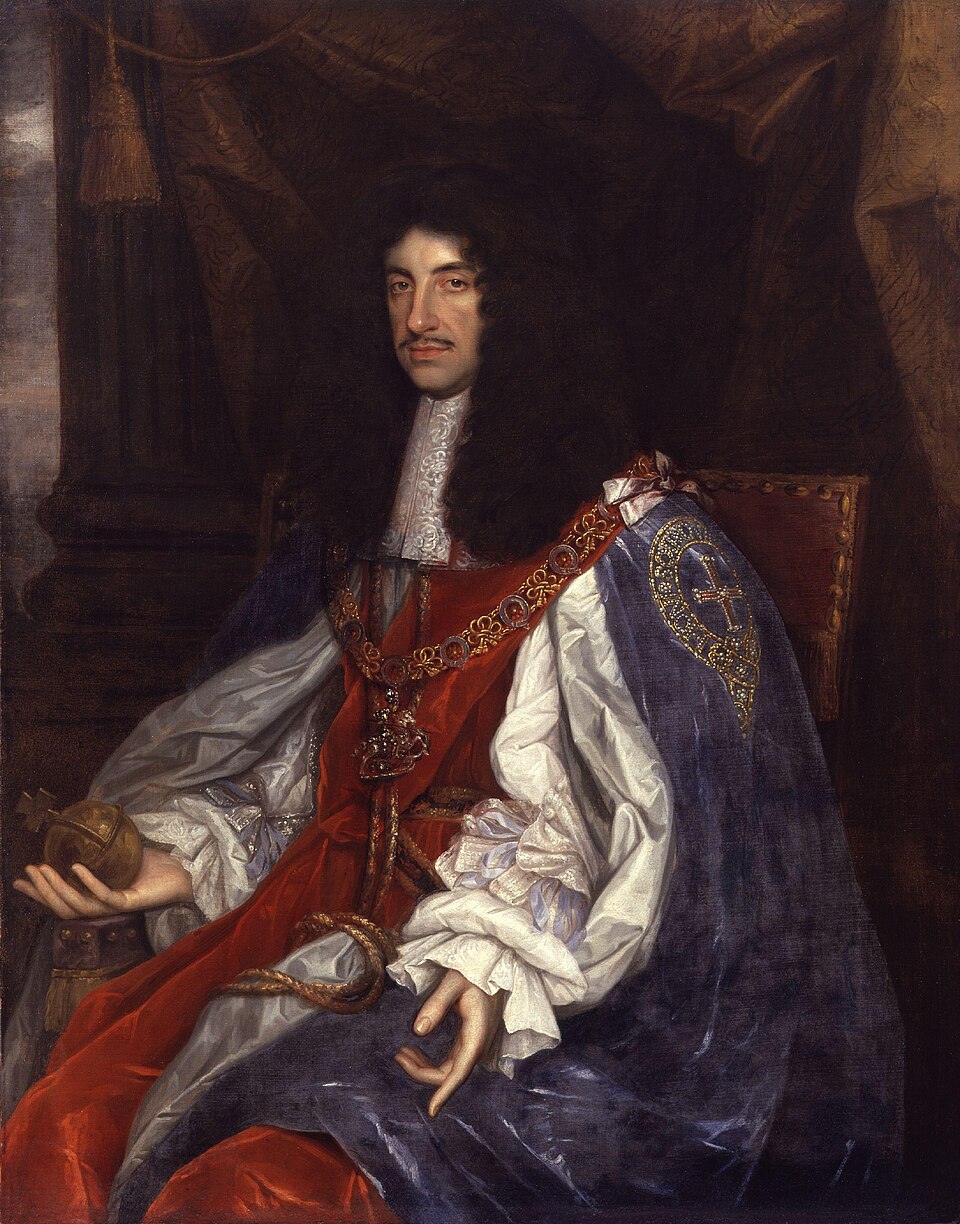
Baker served in the army until after Cromwell’s death on September 3, 1658. The Republic could not be sustained without Cromwell, and by May 1660, Charles II was restored to the throne. The old officers in the army were replaced by royalists. Baker’s position of power and authority dissolved, and he was reduced to grinding knives for a living in the East Smithfield neighborhood of London. He was bitter about his poverty.
Some of John Baker’s contemporaries in New England were executed in England for treason. In January 1661, a few months after Colonel Okey’s execution, a former colonist and religious radical named Thomas Venner attempted an uprising. It sparked four days of chaos in London. Venner was a former York, ME resident who had moved to New England in 1637 and returned to England in 1659. Venner was quickly caught and brutally killed. Sir Thomas Vane, another former New England resident (1635-1638), was executed in June 1662 for his past Parliamentary activities. Vane served briefly as governor of Massachusetts Bay Colony, 1636-1637.
The Tonge Plot or The Plot of 1662
Sometime in the early fall of 1662 John Baker was approached by a man named John Bradley. Bradley asked why Baker was in such a lowly condition, reduced to grinding knives for a living. Baker replied that he had to make a living somehow. Bradley told Baker that there was a plan to overthrow the monarchy and restore the republican government. Bradley offered to pay Baker to recruit Cromwell’s former soldiers and religious radicals to participate in a plot to kill King Charles II. He took Baker to see a secret arms cache, and Baker was enthusiastically drawn into the cause. But John Bradley, messenger, spy, and trepanner was not a conspirator, but an informer and government spy. Bradley was paid by the crown to root out actual conspiracies and entrap disgruntled former soldiers. The government under King Charles II had a highly effective intelligence network. They infiltrated the ranks of the schemers and pushed them to action in order to round them up. When the authorities first learned of the plot on 15 October 1662, Bradley was working with them by 20 October. John Baker stated to another informer, a man named Hill, that the “Rogues” at Whitehall would be slaughtered within a few weeks, and he himself hoped to kill the king in order to deliver the country “from the Tyranny of an Outlandish Dog.” Baker described a plan “for the deliverance of his brethren from the Yocke & Slaverie of Monarchie,” and even asserted that “if hee could have met the King in battle fields, hee could have fund in his heart to have washed his hands in the Kings heart Blood.” The conspiracy’s ringleaders were arrested by the end of October 1662, and Baker found himself not with bloody hands but locked in Newgate Prison.
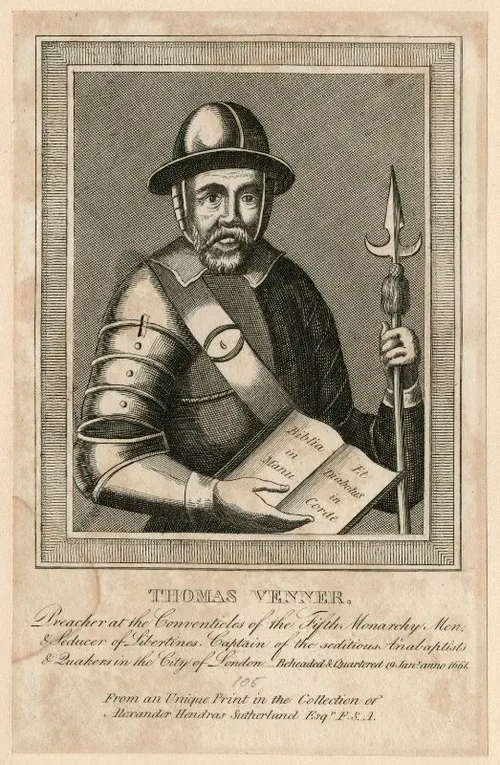
Thomas Tonge (or Tong), the alleged architect of the plot, may have been a distiller and tobacco merchant. In Samuel Pepys diary, Pepys notes interacting with Tonge—first as a purser and later a ropemaker—eventually employing him to investigate embezzlements at the Portsmouth naval yards. Tonge was a former Cromwellian soldier. The Tonge Plot aimed to overthrow King Charles II and bring back a republican government based on the ideals of the English Civil War. They sought religious freedom for Protestants, the abolition of the Church of England’s bishops, and the removal of the Book of Common Prayer – all Puritan goals. The conspirators intended to launch a coordinated, multi-city attack in the autumn of 1662. The important targets included the Tower of London, Windsor Castle and Whitehall Palace. Following his trial at the Old Bailey on 11 December 1662, Tonge and three of his co-conspirators, George Phillips, Francis Stubbs, and Nathaniel Gibbs, were executed for high treason on 22 December 1662 at Tyburn.
On 16 December 1663, diarist Samuel Pepys noted in his diary that several “Fanatiques” were on trial for plotting against the Crown. Pepys records that a former Cromwellian Life-Guardsman turned tinker named John Baker came forward as a key prosecution witness for the state. Did Baker turn to avoid torture or to save his life? In the presence of King Charles II on 15 December 1662, Baker came forward with further revelations about the plot. Tonge wanted to approach Whitehall through a private garden and backstair, a route known to Baker. Baker deposed that two royal Guards who had formerly served with him in Cromwell’s Horse Guards would provide entry to Whitehall to kills the king. Baker also offered to serve in a band of fifty responsible for capturing the king as he rode through London. He allegedly offered to lure the king out of his coach to give Tonge a better shot.
Tyburn and Aftermath
The government held another trial concerning the Tonge Plot on 21 February 1663. John Baker, age 71, and Philip Gibbs, Nathaniel’s brother, were charged with treason as “chief” conspirators. Gibbs had been arrested in January 1663 at the home of William Pardoe where he had gone to settle his estate before fleeing overseas. Found guilty of treason, Baker and Gibbs were executed at Tyburn two days after the trial. (Note: I have also read that he was hung in August 1663. The date is not clear, but he died between February-August 1663.)
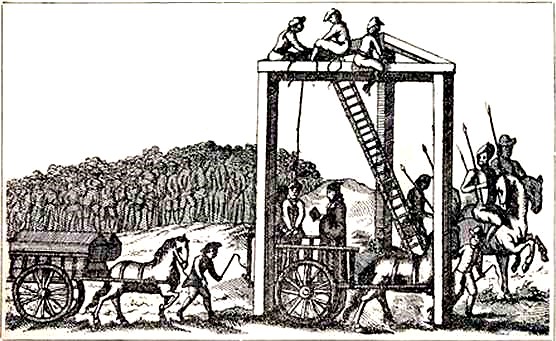
The Tyburn Gallows where Baker was hung, known as the “Tyburn Tree,” was London’s principal site for public executions from 1196 to 1783. During that time, an estimated 50,000 people died here. In 1571, a permanent and special triangular wooden scaffold was built. Prisoners stood in horse-drawn carts beneath the beams. When the carts moved away, the prisoners were left suspended. The trip from Newgate to Tyburn could take up to three hours because crowds packed the streets to catch a glimpse of the condemned.
Baker was spared the most gruesome parts of execution for traitors—castration, disembowelment, and quartering. His co-conspirators executed in December 1662 suffered those punishments. Perhaps King Charles II was more merciful due to Baker’s testimony. Baker may have hoped that becoming a turncoat would spare him from the scaffold. He was kept alive longer than the others in hopes he would give up more names. When he didn’t, he was put to death.
When I was in London in September 2018, I made a point to find the site of Tyburn Tree. For a place that saw so much drama, history and suffering, it is now a very nondescript traffic island with three oak saplings and a circular memorial surrounded by pavers. I looked up at the sky and wondered what John Baker thought about in his final moments. Was he in a cold fury or resigned? Was he surprised that his life was to end by a noose? Given his defiant character, I think that he had no regrets except that the plot failed. If Baker had any last words they weren’t recorded. After he was cut down from the gallows, his body was probably thrown into the Tyburn Pit. There he shared space with other unclaimed bodies and the remains of Oliver Cromwell’s mutilated corpse. Baker’s executioner was mostly likely Edward Dun, an English executioner who served as London’s “common hangman” from 1649 to 1663. Dun assumed the post soon after the death of Richard Brandon, the headsman believed to have executed King Charles I.
John Baker’s daughter, Sarah Nason, died about the same time he did, either in 1662 or 1663. It’s unknown if either one knew of the fate of the other. Or cared.
A few former colonists who knew of John Baker were in London around the time of his trial and execution. The Rev. William Hooke, a Puritan clergyman formerly of New Haven, CT, in a letter dated 23 March 1663 tells how “John Baker, sometime a planter in New England, has his part in trepanning men into treason and then informing against them; he lyeth now in Newgate.” On 7 April 1663, Edward Godfrey, resident of Maine and now living in London, wrote disparagingly of “Heugh Peeter, Vane, Venner, Baker, Potter, who to avoid their principles fly thither…for shelter.” Was this the same Edward Godfrey who commented on John Baker’s cattle judgement back in 1651 in York, Maine?
Baker’s Spring, Wells, Maine
When Lori and I visited South Berwick, York, and Kittery, Maine to look for evidence of Richard Nason and his family, we traveled to Wells, Maine to look for a spring named after John Baker. It took us a while, but we found the spring near the intersection of Boyd’s Corner Road with Tatnic Road. Baker’s Spring had been named as early as 1660. According to one version, Baker was believed to have hidden in the woods after conspiring to kill King Charles I. When King Charles II came to the throne in 1660, Baker supposedly hid under a rock near the spring for two years. According to legend Baker fled England to escape the vengeance of Charles II. He backed the “wrong side” when he supported Oliver Cromwell.
Beloved local author Sarah Orne Jewett described the spring in her 1889 book, “The White Rose Road”: “We passed the spring which once marked the boundary where three towns met, –Berwick, York, and Wells, –a famous spot in the early settlement of the country, but many of its old traditions are now forgotten. One of the omnipresent regicides of Charles the First is believed to have hidden himself for a long time under a great rock close by…”
The local legend got some elements right and others wrong. John Baker plotted to kill King Charles II, not his father. He also lived in Wells prior to his departure for England and may have had property near the spring.
When Charles II was restored to the throne in 1660, three of the regicides—judges who signed the death warrant of his father, Charles I—fled to New England to escape execution. Their names were Edward Whalley, William Goffe and John Dixwell. Edward Whalley and his son-in-law, William Goffe fled to New Haven Colony to hide out in caves and large rock formations. They eventually returned to Massachusetts, settling secretly in the remote town of Hadley.
Baker’s Spring, and the descendants of Sarah Baker Nason, are what remain of the story of John Baker. Some of us have inherited his temper. 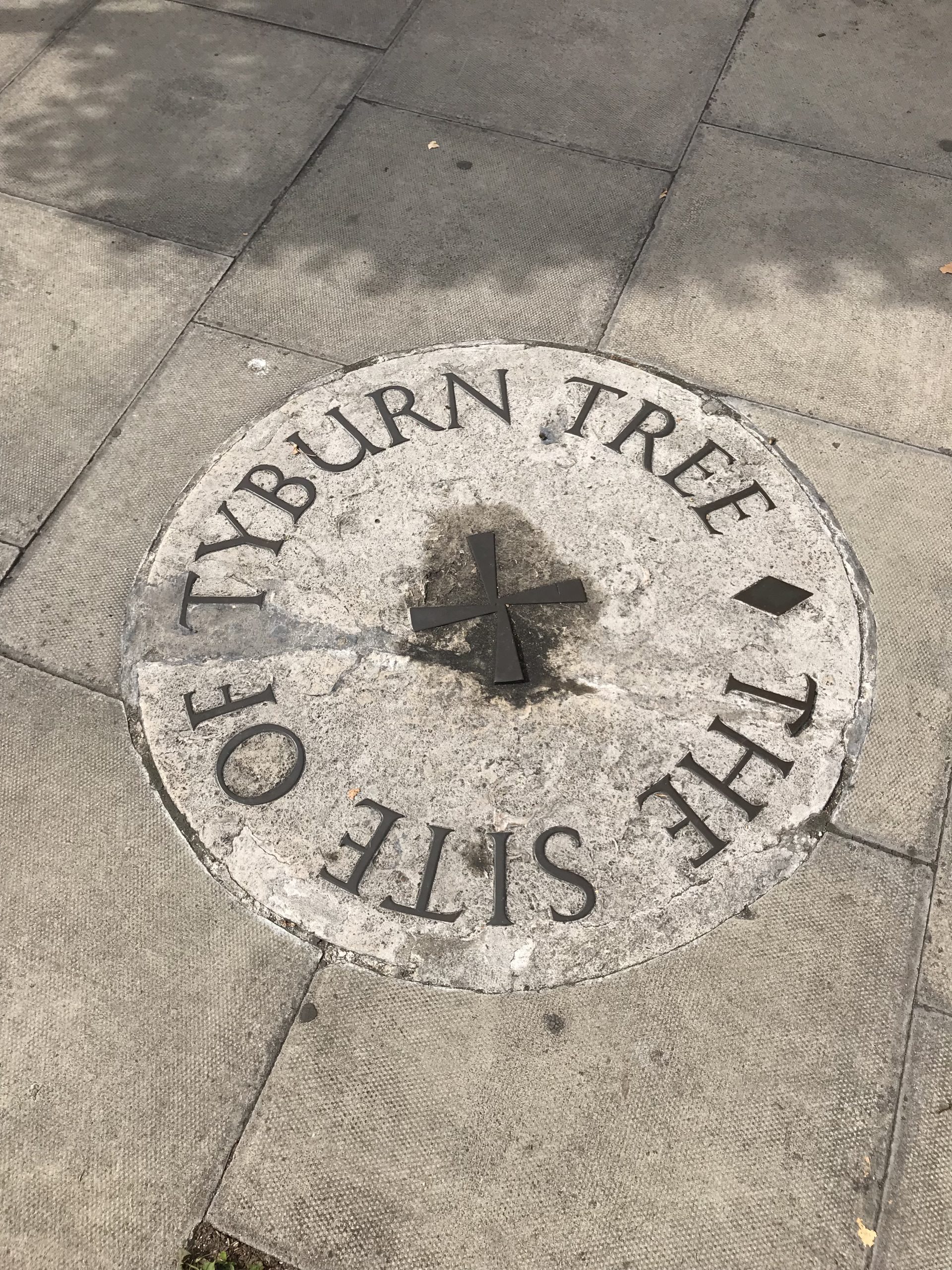
Court Records & Journal Mentions – 1630-1663
1630 – Arrived in Massachusetts Bay Colony. Settled in Charlestown near Boston
1630 – 7 September -the Court of Assistants decided in favor of John Baker in a dispute with Mr. (William) Clark
1630 – 18 September – Coroner’s jury
1630 – 30 November – the Court of Assistants ordered that “John Baker shalbe whipped for shooting at fowl on the Sabbath Day”
1631-1632 – John Baker and Charity, his wife were admitted to the Boston church as members #126 and #127 in late 1631 or early 1632
1634 – 14 May – Freeman
1637 – 11 September – Charleston allowed Seth Switzer “to buy John Baker’s house promising not to sell to any but whom the town approveth”
1637 – 30 September – Seth Switzer “bought of Jno. Baker his house with four acres in the neck with five acres on mistickside, & three cows hay ground”
1638 – Charlestown Book of Possessions the first two parcels held by Robert Leach (dwelling house with yard, garden and outhousing; and two acres adjoining) were “bought of John Baker.”
1638 – holds several minor offices in Newbury, MA
1638 – Newbury committee to regulate arms – 19 June
1639 – 10 October – John Underhill, governor of New Hampshire, wrote to John Winthrop and Thomas Dudley, governor and deputy governor of Massachusetts Bay Colony, complaining about John Baker: “…I here I am dayli abused by malischous tongse: John Baker I here hath rot to the honnored depoti, how as I was dronck (drunk) and like to be cild, (killed) and both falc vpon okachon I delt with Wannerton.. (It was true he had drawn his sword on Thomas Warnerton), but he had done so because “he abusing me to my face, dru vpon him with intent to corb his insolent and dasterdli sperriti..”
1639 – John Baker and John Pemberton, members of the Boston church, who had been recommended (but not dismissed) to the church at Newbury, engaged in a bitter dispute. It may be the reason why Baker left Newbury, MA for York, ME.
1639 – Taxed in Dover, NH as “leftenant Baker.”
1640 – John Baker appeared several times at the Saco, ME court, in some instances as a deputy from Agamenticus (York, ME).
February 1640/1641 – Reverend Thomas Larkin, Dover, NH, wrote to John Wintrop relating his disputes with Reverend Hanserds Knowles, and told of Knowles pressing his case “in private incredibly to one John Baker not unknown to you.” (Note: Reverend Hanserd Knollys (often spelled Knowles, 1598–1691) was an influential English Particular Baptist minister, missionary, and educator. A prominent figure in the early Nonconformist movement, his radical puritan beliefs led him to face religious persecution.)
1641 – April or May. John Wintrop relates the following story: “One John Baker, a member of the church of Boston, removing himself from thence to Newbury for enlargement of his outward accommodation, being grown wealthy from nothing, grew there very disordered, fell into drunkenness and such violent contention with another brother, maintaining the same by lying, and other evil recourses, that the magistrates sent to have him apprehended. But he rescued himself out of the officer’s hands and removed to Acomenticus, where he continued near two years, and now at this time he came to Boston, and humbled himself before the church, confessing all his wickedness, with many tears, showing how he had followed Satan, and how he had labored to pacify his conscience by secret confessions to God, etc. but could make no peace; yet he could not bring his heart to return and make public acknowledgement, until the hand of God fell upon Swain his neighbor, who fell into despair, and would often utter dreadful speeches against himself, and cry out that he was all on fire under the wrath of God…, and after a time he hanged himself…Baker…was so struck with it as he could have no rest til he came and made his peace with the church and court. Upon his confession, the church was doubtful whether they ought to cast him out, his offences being so scandalous, notwithstanding they were well persuaded of the truth of his repentance..” According to Governor Winthrop’s journal, after Baker was pardoned and received back into the church, he “fell into gross distempers soon after.”
1642 – 26 March – “John Baker a husbandman” was admitted to the Boston church.
1642 – 28 March – admitted as a townsman of Boston
1643 – 31 August – on grand jury in Dover, NH
1643-1644 – 2 February – George Cleeve asked John Winthrop to subpoena certain people to support his case, including “John Bakar of Pascattaqua”
1645 – 10 September he was presented before the Dover, NH court for five offences:
–“John Baker fynned Ten shillings for drawing his sword & running after Indyans with it drawd
–John Baker fyned Ten shillings for thretning Willam ffurber saying he would kill him if he were hanged for it
–John Baker admonished for saying the Grand Jury presented him of malice. Fined six shillings
–John Baker admonished for trading with Indyans of the Sabbath day. Fined six shillings.
–John Baker presented for beating Richard Nason that he was black & blew & for throwing a fire shovel at his wife. Baker fined five shillings
1646 – September 6 – dismissed from the church in Boston to the church in Gorgeana (York).
1646 – 20 September “Our brother John Baker with the consent of the Church by their silence, and according to his own desire, had letters of dismission granted unto him unto the Church at Gorgiana in Agamenticus,” (ME).
1648 – 19 December – appeared on Dover tax list, where his estate placed him in the top fifth of all estates in town.
1649 – appeared on Dover tax list
1649 – 8 October – Baker’s name appeared on documents submitted to the Dover, NH court.
1650 – 22 May – Lt. John Baker was deputy to the Massachusetts Bay General Court for Dover, NH.
1650 – appeared on Dover tax list.
1651 – 28 January – Baker’s name appeared on documents submitted to the Dover, NH court
1651 – 5 June – Richard Burgis, a resident of York, deposed that “he heard Mr. Hooke (say) unto Mr. Edward Godfrey that he would give unto Goody Baker the wife of John Baker, that he would give those cattle which he had recovered by law from John Baker unto the wife of the said John Baker and his children for their maintenance, and that the said John Baker should not have anything to do with them.” (At York, ME Mr. William Hooke got judgement for 500 pounds against him and was granted John Baker’s cattle by the court. However, according to Edward Godfrey, William Hooke gave the cattle back to John Baker’s wife (Goody Baker).
1652 – 27 May – Baker deposed about laying out of the bounds between Exeter and Dover seven or eight years earlier
1653 – living in Wells, ME. Took the oath of submission to Massachusetts government.
